

Is Your Restaurant Open on Christmas Day and Christmas Eve — A Data Driven Approach to Make a Decision

Every year, as the calendar turns to December, restaurateurs face the same high-stakes dilemma: Should we keep the lights on for Christmas Eve and Christmas Day?
It is a decision that pits potential profit against employee morale, and operational headaches against brand loyalty. For years, this choice was driven by gut feeling or tradition. But today, we have data, real numbers on consumer spending, staffing trends, and market demand, that can turn this emotional debate into a calculated business decision.
Below, we break down the statistics to help you decide if your restaurant should be serving holiday feasts or taking a well-deserved winter’s nap.
See Also: Top 10 Holiday Menu Ideas for Cafes to Crush to Holiday Rush

The Case for Opening: The Revenue Opportunity
The narrative that "everyone eats at home on Christmas" is outdated. Recent trends suggest a massive shift in consumer behavior, driven by convenience, changing demographics, and a desire to escape the kitchen.
1. The Demand is Higher Than You Think
The National Restaurant Association has reported startling figures in recent holiday seasons. Their data indicates that roughly 57% to 77% of consumers plan to let restaurants handle their cooking during the holidays, whether through dining in or takeout.
- The "Convenience" Factor: 82% of consumers cite stress reduction as their primary reason for dining out on holidays.
- The "Burnout" Factor: After Thanksgiving, many home cooks are fatigued. By Christmas, the appetite for scrubbing pots and pans plummets, creating a surge in demand for full-service dining.
2. The "Blue Ocean" Advantage
While demand is high, supply is often low. Data from OpenTable suggests that a significant portion of independent restaurants close on Christmas Day.
- Market Share: If 60% of your competitors are closed, the remaining 40% absorb 100% of the dining demand.
- Visibility: Being one of the few options available boosts your SEO and discovery. Queries for "restaurants open on Christmas near me" spike dramatically on December 24th and 25th.
3. Higher Check Averages
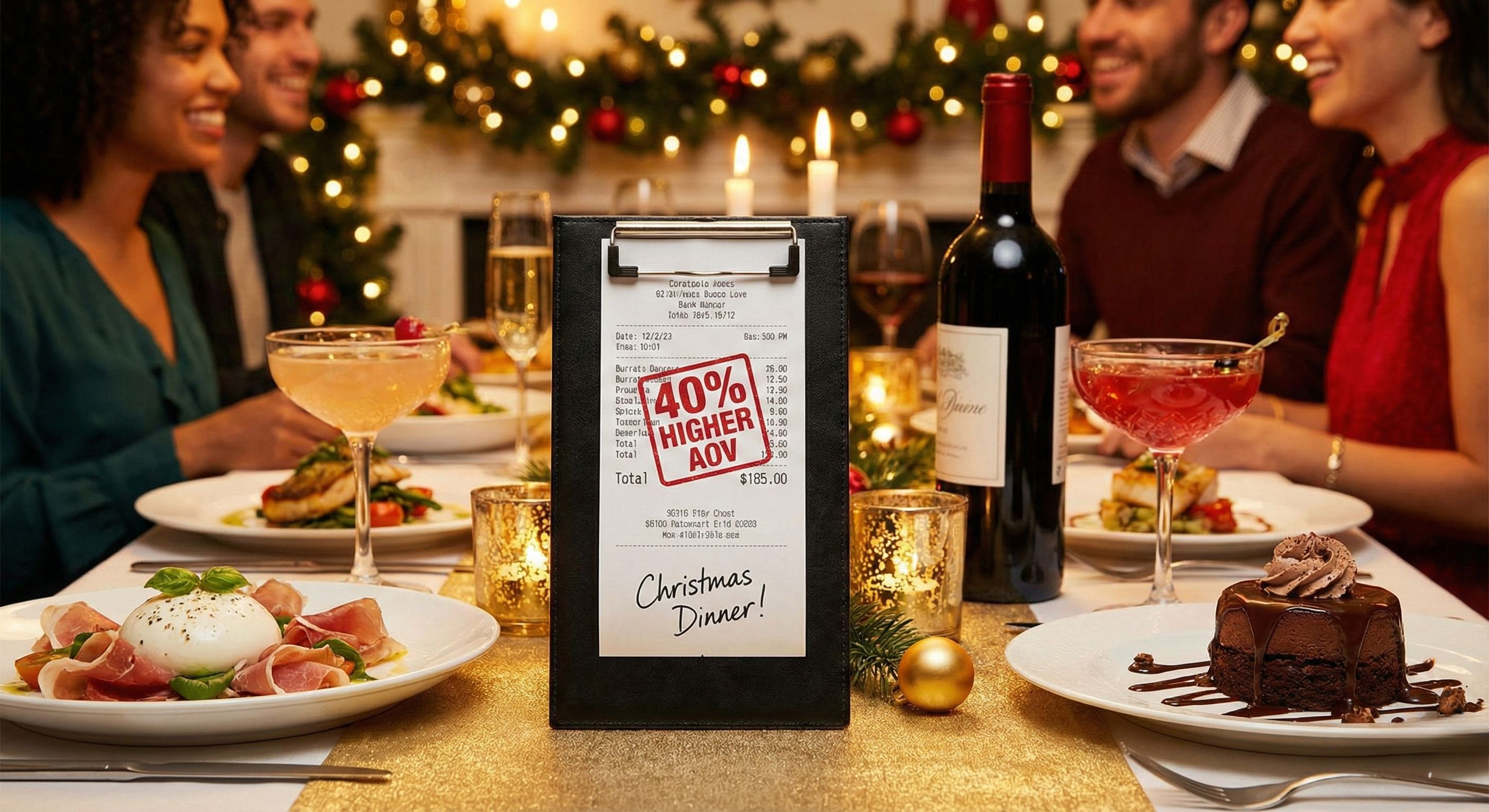
Christmas diners are not looking for a quick bite; they are looking for an experience. Data has shown that while overall transaction counts might dip compared to a standard Friday night, the Average Order Value (AOV) often skyrockets—sometimes by 40% or more.
- Why? Holiday diners are less price-sensitive. They order alcohol, appetizers, and desserts. They are there to celebrate, meaning the "per-head" revenue is significantly higher than a typical service.
4. Niche Cuisines Thrive
If your concept falls into specific categories, opening is almost a guaranteed win. Historical data shows that Asian cuisine (particularly Chinese and Indian) and Hotel Restaurants see massive spikes in traffic on Christmas Day.
- The Cultural Staple: For many Jewish families and those who do not celebrate Christmas religiously, dining at a Chinese restaurant is a beloved tradition. If you operate in this niche, closing is leaving significant money on the table.
The Case for Closing: The Operational Reality
Despite the revenue potential, the data also supports a strong argument for closing. It’s not just about being "nice"; it’s about long-term sustainability and labor economics.
1. The "Ghost Town" Risk for General Concepts
While AOV goes up, overall traffic volume can be volatile. Data in past years has shown that for general American dining concepts, sales on Christmas Day can be up to 84% lower than the average December day.
- The Risk: If you are a casual burger joint or a sandwich shop, you may not attract the "celebratory" crowd. You risk paying holiday labor rates for a dining room that sits empty.
2. The Staffing Crisis & Labor Costs
Labor is the single biggest hurdle.
- The Cost of "Yes": To convince staff to work Christmas, you often need to offer double time or significant bonuses. If your labor cost percentage usually sits at 30%, it could easily balloon to 45-50% on Christmas Day.
- The "Great Resignation" Hangover: In a tight labor market, employee retention is gold. Forcing staff to work major holidays is a leading cause of burnout and turnover. The cost of recruiting and training a replacement (often cited as $2,000 - $5,000 per employee) far outweighs the profit from one single day of service.
3. Reputation and Brand Perception
There is a growing consumer sentiment that values businesses that prioritize employee well-being.
- The "Good Guy" Bonus: Announcing that you are "Closed to let our team be with their families" generates positive social media engagement. It builds goodwill that pays dividends in January and February, notoriously slow months where you need local loyalty the most.
Strategic Decision Framework: How to Decide
Don't guess. Use this three-step framework to analyze your specific situation.
Step 1: Analyze Your Location Data
- Urban vs. Suburban: OpenTable data reveals that urban centers maintain about 40% restaurant availability on Christmas, whereas suburban areas drop to 12%.
- If you are in a city center: Open. You have a captive audience of tourists, travelers, and locals.
- If you are in the suburbs: Close. Your customer base is likely at home with family.
Step 2: Survey Your Staff (The "Veto" Vote)
Before you look at a P&L, look at your roster. Conduct an anonymous survey in October or November.
- Question: "Would you be willing to work Christmas Day for [Insert Incentive: e.g., Double Pay + $50 Bonus]?"
- If less than 60% of your core team says yes, close. Forcing the issue will breed resentment that rots your culture from the inside out.
Step 3: Check Your Historical Data
If you have been open previously, pull your POS reports.
- Look at Labor Cost Percentage for December 25th specifically.
- Did you break even? Did you make a profit?
- Pro Tip: If you only broke even, it wasn't worth it. The operational stress requires a healthy profit margin to justify the day.
If You Do Open: The Playbook for Success
If the data says "Go," do not treat Christmas like a normal Tuesday. You must operationalize differently to ensure profitability and staff happiness.
- Ticketed Events Only (Or Deposits):
- Use a reservation system like Tock or OpenTable to require a deposit. No-show rates can be erratic on holidays. A $25-$50 per person deposit ensures that if you staff up, the revenue is guaranteed.
- Prix Fixe Menus are Mandatory:
- Do not run your full à la carte menu. Offer a 3-course set menu.
- Why? It streamlines kitchen operations, reduces food waste, allows you to run with a smaller back-of-house crew, and guarantees a high check average.
- Limited Hours:
- Open for a specific window (e.g., 12:00 PM – 6:00 PM). This captures the main demand but allows your staff to get home for a late dinner with their own families.
- Aggressive Marketing:
- Update your Google Business Profile immediately. The #1 frustration for holiday diners is driving to a restaurant that says "Open" on Google, only to find the doors locked.
- Promote your "Pre-Order Takeout" heavily. Many families want the food but not the dining room experience. This is high-margin revenue with lower labor costs.

The Verdict
Should you open?
- YES, IF: You are in a high-foot-traffic city, near hotels, offer Asian cuisine, or have a staff that is eager for overtime pay.
- NO, IF: You are a casual concept in the suburbs, your staff is burned out, or your historical data shows slim margins on holidays.
The days of opening "just in case" are over. Use the data, talk to your team, and make the choice that ensures your restaurant — and your people — prosper in the New Year.


Rajat is a growth marketing professional with a passion for creating content that drives engagement and measurable results. He specializes in turning insights into clear, actionable stories that help brands scale.