

The 2026 Tax Calendar for Small Businesses: Deadlines You Can’t Miss
.jpg)
Let’s be honest: the only thing scarier than a surprise health inspection is a letter from the IRS.
For most owners, the anxiety of small business tax filing stems from one thing: the fear of missing a deadline. If you find yourself scrambling for receipts every April, you need a better strategy.
The secret to a penalty-free year is simple — lock in the dates now. We have compiled the ultimate tax calendar 2026 to keep you ahead of the curve. Whether you run a retail shop or need specific guidance on tax filing for restaurants, bookmark this page to stay organized and audit-proof.

Why These Dates Matter More in 2026
Missing a tax deadline isn’t just an administrative annoyance; it’s expensive. The IRS penalties for failure to file or pay on time can eat directly into your hard-earned margins.
For 2026, several key dates fall on weekends, pushing the actual filing deadline to the next business day. Knowing these nuances helps you avoid late fees and keeps your business in good standing.
The Complete 2026 Small Business Tax Calendar
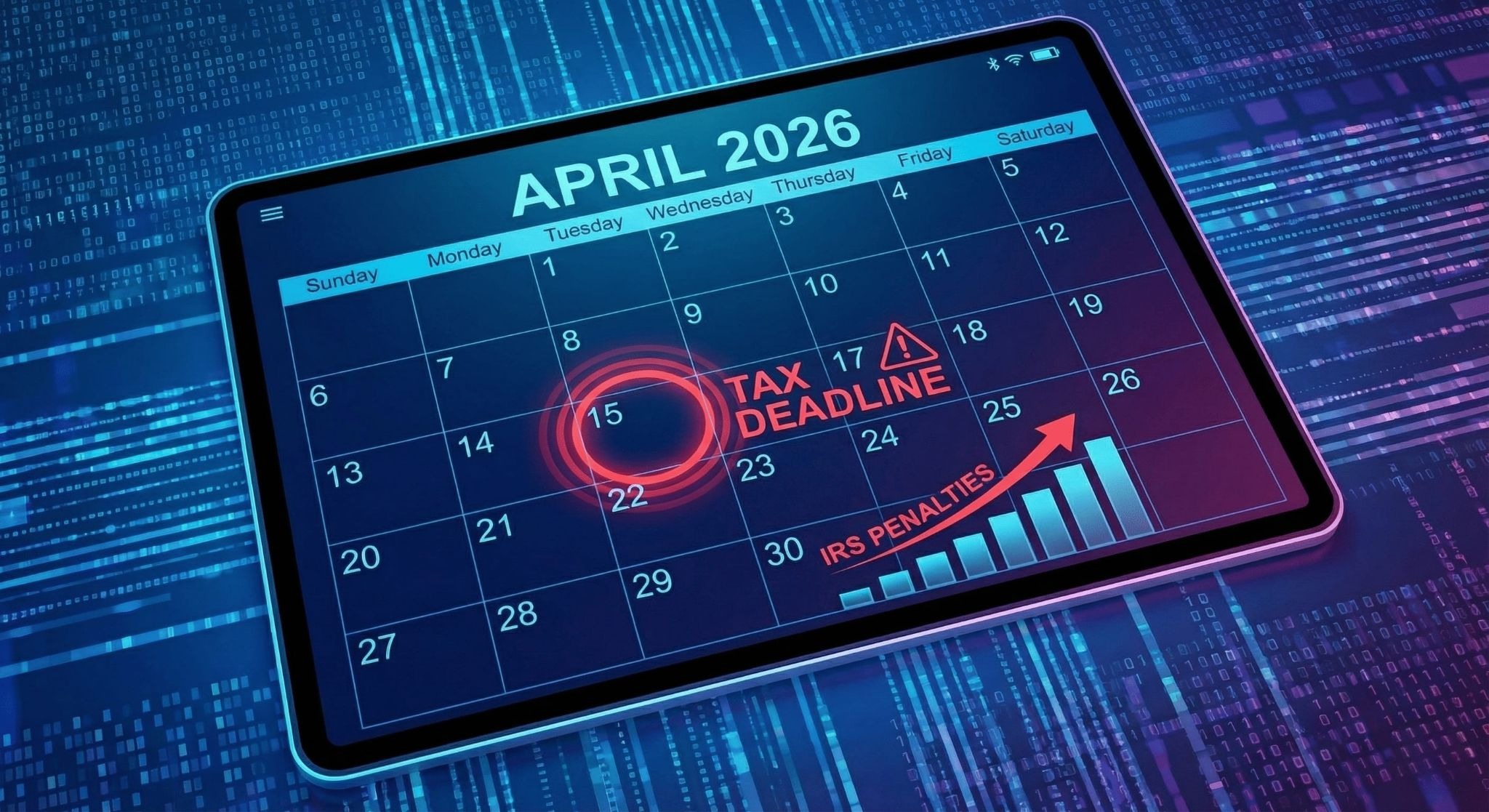
Here is your cheat sheet for the year. Note that because some standard deadlines (like January 31st and March 15th) fall on weekends in 2026, the IRS moves the due date to the next business day.
A Special Note on Tax Filing for Restaurants
If you run a restaurant, coffee shop, or bar, your tax obligations are slightly more complex than the average small business tax filing. You are dealing with tips, sales tax, and payroll for a shifting workforce.
1. The FICA Tip Tax Credit
Don't leave money on the table. The FICA Tip Credit (reported on Form 8846) allows restaurant owners to claim a credit for the Social Security and Medicare taxes they paid on employees' tip income. This can be a significant deduction.
2. Form 8027 (Tip Income Reporting)
If you have a "large food or beverage establishment" (generally defined as having more than 10 employees and where tipping is customary), you must file Form 8027.
- Paper Filing Deadline: February 28, 2026
- E-Filing Deadline: March 31, 2026
3. Sales Tax Is Not Your Money
Remember, sales tax is a "pass-through" tax. You collect it from the customer to pay the state. Mixing this with your operating cash flow is a dangerous game. Use a smart POS system to track exactly how much sales tax you have collected so you aren't scrambling when your state's filing date arrives (which varies by state — usually monthly or quarterly).
Also Read: The Ultimate Guide to POS Analytics for Small Restaurants
How to Stay Audit-Proof This Year
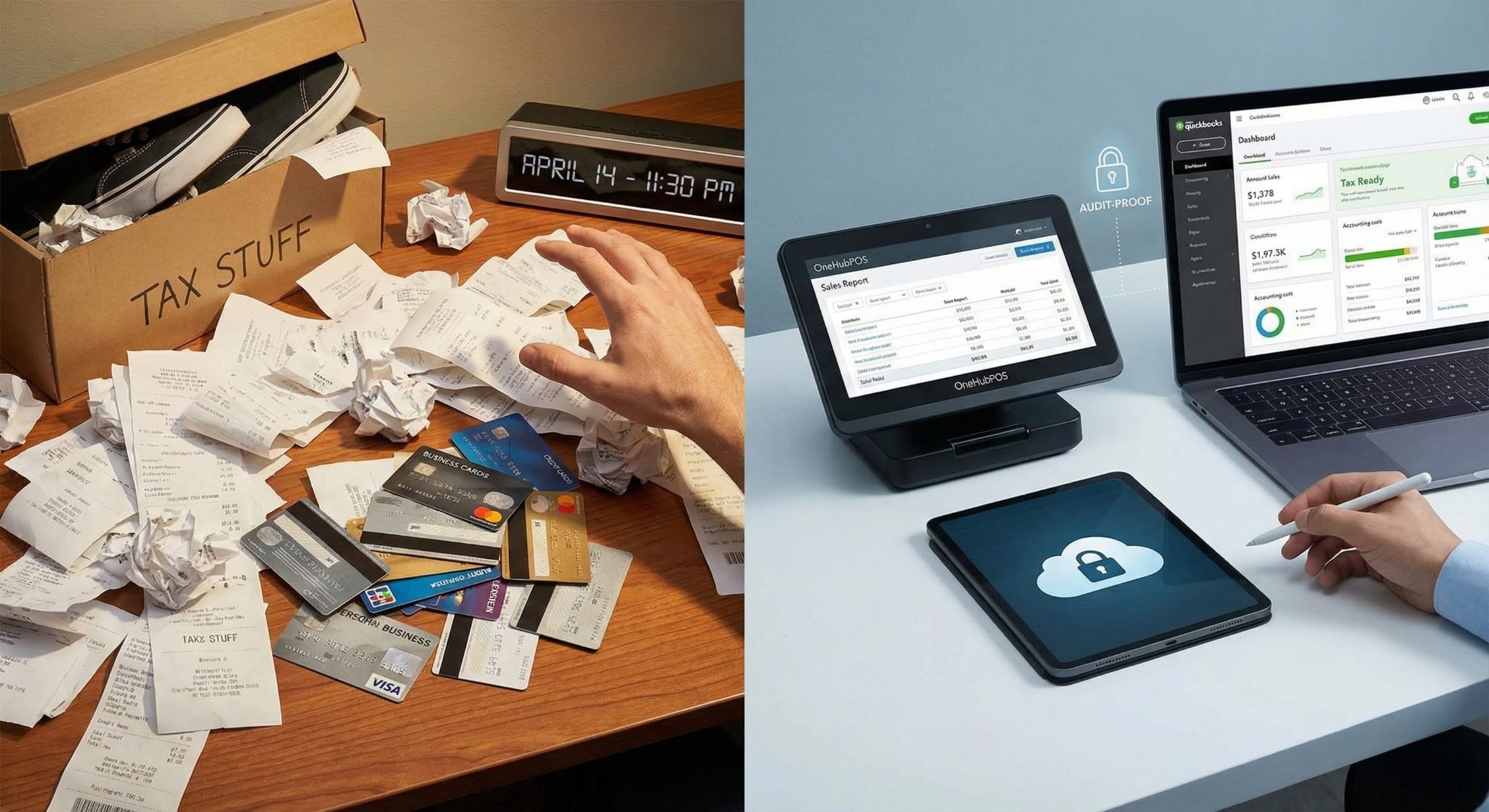
The difference between a frantic tax season and a smooth one is often your technology.
- Ditch the Shoebox: using a cloud-based Point of Sale (POS) means your sales data, labor costs, and inventory numbers are digitized automatically.
- Integrate Accounting: Your POS should talk to your accounting software (like QuickBooks or Xero). This ensures that every transaction is recorded in real-time, eliminating human error.
- Separate Finances: Never mix personal and business expenses. It pierces the corporate veil and makes small business tax filing a nightmare.
Simplify the Tax Season with Smarter Technology
The right tools make tax filing for restaurants and retailers effortless. OneHubPOS automates your sales reporting, tracks your sales tax liabilities, and organizes your labor data so you can hand everything to your accountant with a smile.
Don't let legacy systems slow you down. Book a free OneHubPOS demo today to see it in action.
Frequently Asked Questions (FAQs)
In 2026, small businesses must adhere to several critical filing dates. Because some standard deadlines fall on weekends, the IRS has adjusted the due dates as follows:
- January 15, 2026: Q4 2025 estimated tax payment due.
- February 2, 2026: Deadline to file W-2s and Form 1099-NEC.
- March 16, 2026: S-Corp (Form 1120-S) and Partnership (Form 1065) returns due.
- April 15, 2026: Individual (Form 1040), C-Corp (Form 1120) returns, and Q1 2026 estimated tax payments due.
The standard deadline for filing W-2 forms for employees and Form 1099-NEC for independent contractors is January 31st. However, in 2026, January 31st falls on a Saturday. Therefore, the IRS moves the filing deadline to the next business day, which is Monday, February 2, 2026. Failing to meet this deadline can result in penalties from the IRS.
For the 2026 tax year, S-Corporations and Partnerships must file their returns by March 16, 2026. While the standard deadline is March 15th, that date falls on a Sunday in 2026, pushing the official due date to the following Monday. If a business cannot file by this date, they must file a valid extension to move their deadline to September 15, 2026.
Restaurants have additional tax obligations beyond standard income tax filings. Key requirements include:
- Form 8027 (Tip Income Reporting): Large food and beverage establishments must file this by February 28, 2026 (if paper filing) or March 31, 2026 (if e-filing).
- FICA Tip Tax Credit: Restaurants can file Form 8846 to claim a credit for Social Security and Medicare taxes paid on employee tips.
- Sales Tax Remittance: Restaurants must track collected sales tax separately from revenue and remit it to the state according to their specific local schedule (monthly or quarterly).
A modern, cloud-based POS system like OneHubPOS simplifies tax season by automating data collection and reducing human error. It assists with tax preparation by:
- Automating Sales Reporting: Instantly digitizing sales data and labor costs.
- Tracking Tax Liabilities: accurately calculating sales tax collected across different regions to prevent "ghost inventory" or underpayment.
- Integrating with Accounting Software: Syncing directly with platforms like QuickBooks or Xero to ensure financial records are audit-proof and up-to-date in real time.


Rajat is a growth marketing professional with a passion for creating content that drives engagement and measurable results. He specializes in turning insights into clear, actionable stories that help brands scale.