

The Ultimate Tax Preparation Checklist for Baristas & Coffee Shop Owners

What to Prepare, What to Review, and What Most Cafés Miss
Running a coffee shop means juggling slim margins, high transaction volume, tipped labor, and constant reinvestment in equipment. Tax season shouldn’t feel like another rush hour, but for many café owners, it does.
The difference between a stressful filing and a confident one usually comes down to preparation, not complexity.
This checklist walks coffee shop owners through everything to review before tax filing—from income and expenses to deductions, equipment, payroll, and common café-specific mistakes.
Also Read: 2026 Tax Deadlines You Can Not Afford to Miss
1. Income & Sales Records (Foundational)
Before deductions or credits, make sure revenue is clean and defensible.

What to Gather
- POS sales reports (monthly + annual)
- Breakdown of:
- In-store sales
- Online / mobile orders
- Third-party delivery (if applicable)
- Gift card sales vs redemptions
- Cash vs card sales summaries
Coffee Shop Insight
High transaction counts + small tickets increase the risk of reporting mismatches. POS summaries should match bank deposits after fees.
2. Cost of Goods Sold (COGS) – Coffee-Specific
COGS is one of the most important (and often miscategorized) areas for cafés.
Typical COGS for Coffee Shops
- Coffee beans (green or roasted)
- Milk, alt-milk, syrups, sweeteners
- Pastries and food items
- Cups, lids, sleeves, straws
- To-go packaging and napkins
What to Prepare
- Vendor invoices
- Beginning and ending inventory counts
- Waste/spoilage notes (expired milk, unsold pastries)
Common Mistake
Mixing supplies (COGS) with operating expenses inflates margins and distorts profitability.
3. Labor, Payroll & Tips (Critical for Cafés)
Coffee shops are labor-intensive and tip-heavy—this area gets scrutiny.
What to Review
- W-2s or 1099s (if any contractors)
- Payroll summaries
- Employer payroll taxes paid
- Tip reporting records (POS + payroll alignment)
Barista-Specific Considerations
- Tips must be reported—even pooled tips
- Cash tips often get underreported unintentionally
- POS-tracked tips should match payroll filings
4. Equipment & Technology (Often Underutilized for Deductions)
Coffee shops invest heavily in equipment—but many owners don’t optimize deductions.
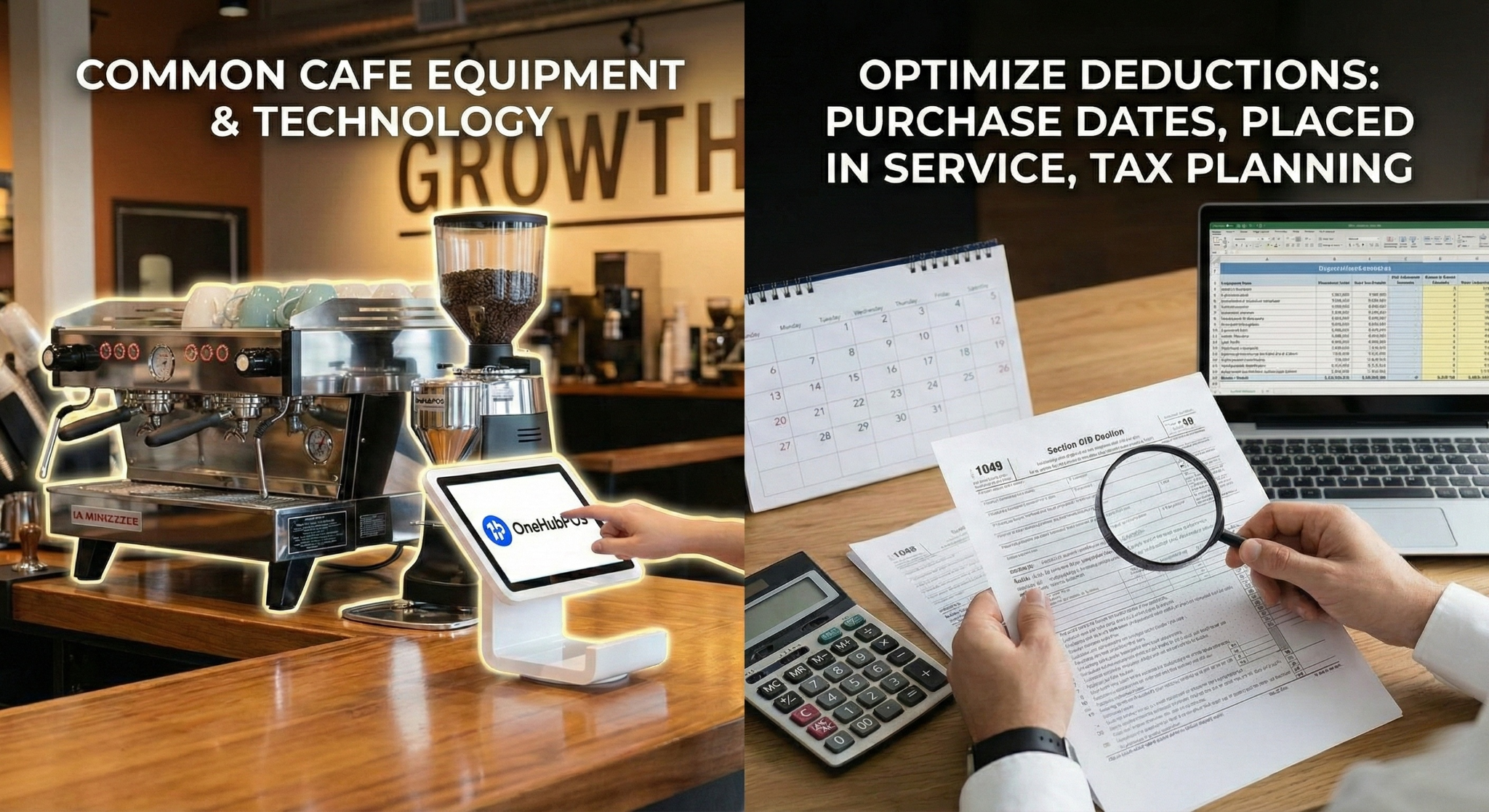
Common Café Equipment
- Espresso machines
- Grinders
- POS terminals and tablets
- Receipt printers, cash drawers
- Refrigeration units
- Back-office computers
- Security cameras
What to Check
- Purchase dates
- Whether equipment was placed in service
- Whether Section 179 or depreciation applies
Strategic Insight
Equipment is unavoidable in cafés. Tax planning determines whether it strains cash flow or supports growth.
5. Rent, Utilities & Occupancy Costs
These are typically the largest fixed costs.
Gather:
- Lease agreements
- Rent payment summaries
- CAM charges (if applicable)
- Utilities:
- Electricity
- Gas
- Water
- Internet
Coffee Shop Reality
Extended hours + espresso machines = higher energy usage. Ensure utilities are fully captured.
6. Marketing & Brand Spend
Often overlooked, but fully deductible.
Typical Café Marketing Expenses
- Instagram and Google ads
- Influencer collaborations
- Loyalty programs
- Menu printing and signage
- Local events and sponsorships
What to Prepare
- Invoices
- Ad platform summaries
- Promotional expenses tied to customer acquisition
7. Merchant Fees & Payment Processing
Small per-transaction fees add up fast in coffee shops.
Review:
- Credit card processing statements
- POS SaaS fees
- Online ordering platform fees
Insight
High-volume cafés often underestimate how much they pay in processing fees annually—these are deductible and should be tracked carefully.
8. Insurance & Licenses
Often forgotten until audits.
Typical Items
- General liability insurance
- Workers’ comp
- Business licenses
- Health department permits
- Food handling certifications
9. Sales Tax & Local Compliance
Varies by state and city.
What to Confirm
- Sales tax collected vs remitted
- Food vs beverage tax treatment
- Local taxes on prepared drinks
Coffee Shop Gotcha
Tax rules can differ for:
- Hot vs cold drinks
- Dine-in vs to-go
- Food vs beverage combos
10. Home Office & Mileage (If Applicable)
For owner-operators.
Possible Deductions
- Home office (admin work)
- Mileage for:
- Supplier runs
- Equipment servicing
- Bank deposits
Only applicable if properly documented.
11. Credits & Deductions to Ask Your CPA About
Not all will apply—but owners should ask.
- Section 179 (equipment)
- Depreciation schedules
- Local small business credits
- Energy-efficient equipment incentives
- State-specific café or foodservice credits
12. Final Pre-Filing Checklist
Before filing:
- ✔ Sales reports match bank deposits
- ✔ COGS and expenses clearly separated
- ✔ Payroll and tips reconciled
- ✔ Equipment purchases reviewed
- ✔ Sales tax verified
- ✔ CPA reviewed café-specific nuances
Remember:
Tax outcomes are determined months before filing, not during filing.


Sahana is a seasoned GTM leader with a passion for building startups. She excels in crafting GTM strategies for tech products, driving revenue growth.